The Roles Love Asks Us to Carry
I’ve been many things in my life—friend, student, believer, public servant—but one identity has quietly reshaped all the others – sister. Over the years, my role as a sister has grown into guardian and caregiver as I adapted to wearing the hats of mother, protector, advocate, and more without ever meaning to.
It’s a role I didn’t choose in a single moment. It unfolded over time, growing slowly, shaped by love, responsibility, and circumstances that don’t fit neatly into a family tree diagram. Writing about it is complicated, because so much of it is entangled with family dynamics and trauma that aren’t mine alone to tell. But the truth is, I can reflect on who I’ve become without unearthing every painful detail of how we got here.
My youngest sibling, Gray, (lovingly nicknamed “Bean”), came into the world and our family when I was 15. I remember the joy of it so vividly—the excitement of a new sibling, the sense that something sweet and hopeful had entered our lives. I carried baby Bean around the mall in a baby wrap, proud in that way only a teenage big sister can be. I took them on dinner dates, bought them clothes, learned their likes and dislikes, and watched their personality unfold in real time. Long before I understood words like “caregiver” or “guardian,” my life was already making space for them.
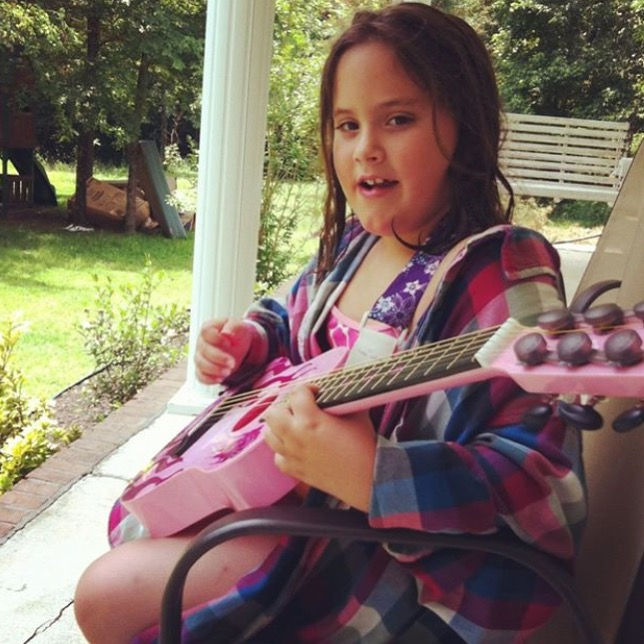
As the years passed, our lives became inseparable in ways that went far beyond typical sibling closeness. While other parts of my life shifted—school, work, cities, belief systems—Gray remained a constant. We were in sync for long Facetime calls and secrets shared, but also hard conversations about 504 plans and healthcare research. Loving Gray meant showing up again and again, sometimes in joyful ways and sometimes in deeply exhausting ones. It meant responsibility layered onto affection, and concern braided tightly with devotion.
What I didn’t realize at first was how much this role would change me.
I grew up with a very rigid understanding of the world—clear rules, fixed roles, tidy answers to messy questions. Control felt safe. Certainty felt like faith. But loving Gray required something else entirely. It required flexibility. It demanded patience when chaos showed up uninvited. It forced me to sit in gray spaces without rushing to resolve them, to learn that care doesn’t always look like fixing and love doesn’t always come with simple solutions. As a certified “fixer” - this was a hard lesson to learn.
Being responsible for someone you love so deeply humbles you. It strips away the illusion that you can manage life through sheer willpower or correctness. Gray’s challenges—emotional, logistical, existential—didn’t respond to rigidity. They responded to presence. To listening. To an open heart that could hold both fear and hope at the same time.
Over time, I noticed something surprising: the very traits I once struggled to put first—softness, adaptability, emotional attunement—became my greatest strengths. I learned how to conversate instead of control, how to support instead of dictate, how to advocate fiercely without erasing autonomy. I learned how to be steady even when the ground felt unstable.
Our ability to overcome challenges together didn’t just shape Gray’s life. It reshaped mine.

When Gray and I moved back to Chicago this year, it felt like a quiet declaration: we are choosing each other, again. Not out of obligation, but out of love forged by years of shared resilience. Now, for me, the lines between sister, guardian, and chosen family have blurred completely. I am not replacing a parent, and I’ve never tried to be one—but I’ve carried responsibility with the weight and seriousness of someone who understands what’s at stake.
There is grief in this role, too. Grief for the ease we didn’t always have. Grief for the ways childhood and young adulthood were shaped by necessity rather than freedom. But there is also profound pride. Pride in who Gray is becoming. Pride in who I have become alongside them. Pride in the life we’ve built with care, intention, and deep mutual trust.
Loving Gray has taught me that identity isn’t static. It evolves in response to love, responsibility, and the courage to grow beyond what you were taught. I am less rigid now. More patient. More human. I know how to sit with discomfort and still offer steadiness. I know how to protect without controlling, to guide without gripping too tightly.
Our lives have been twined together since the beginning—from baby carriers and dinner dates to late-night conversations and shared survival. That bond is permanent, not because of blood alone, but because of everything we’ve weathered side by side.
Being Gray’s sister—and so many other things at once—has molded me into the strongest, most resilient version of myself. Not despite the challenges, but because love asked more of me than I ever expected, and I said yes.


Comments